Kindergarten–2nd Grade | Kindergarten - 2nd Grade | Academics | City and Country School, New York
Alert
Info
Learning in K-2nd Grade
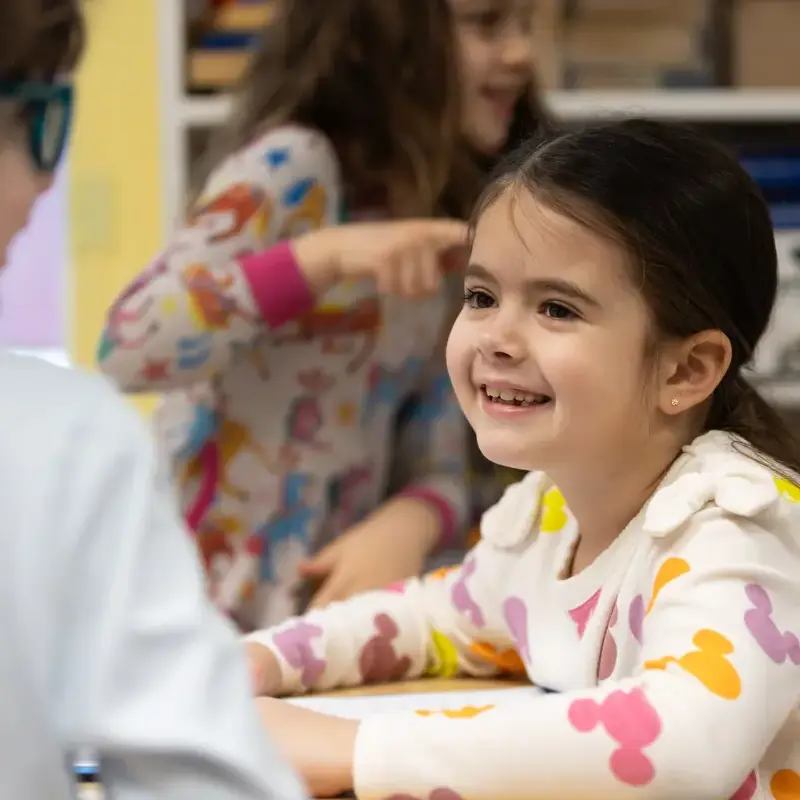
In Kindergarten through second grade, or as we say at C&C Vs through VIIs, students build on the foundation of exploration established in the earliest years, growing into more structured inquiry while still learning through experiences driven by the children. Social studies concepts anchor the curriculum, connecting reading, writing, math, science, and the arts to meaningful, real-world contexts that emerge from students’ questions and observations. Collaboration becomes more intentional as children learn to share ideas, solve problems together, and take increasing responsibility for their classroom community. Throughout these years, teachers guide and extend learning, nurturing critical thinking, creativity, and a deepening sense of self within the group.
LOWER SCHOOL · Vs–VIIs
Explore the curriculum
Choose a subject to discover how learning comes to life.
Social Studies
Children investigate topics that naturally emerge from their surroundings and experiences—from their immediate family and school community in the Vs, to our neighborhoods of Lower Manhattan in the VIs, outward into our borough and its history in the VIIs. Through their studies, Vs-VIIs navigate concepts of geography, rules and rights, history and change, and both individual and community needs and wants. Through their social studies research, City and Country students understand the interdependent systems of our world, and see themselves as active, capable contributors to those systems. These studies deepen their understanding of the world while offering rich contexts for interdisciplinary connections.
Math
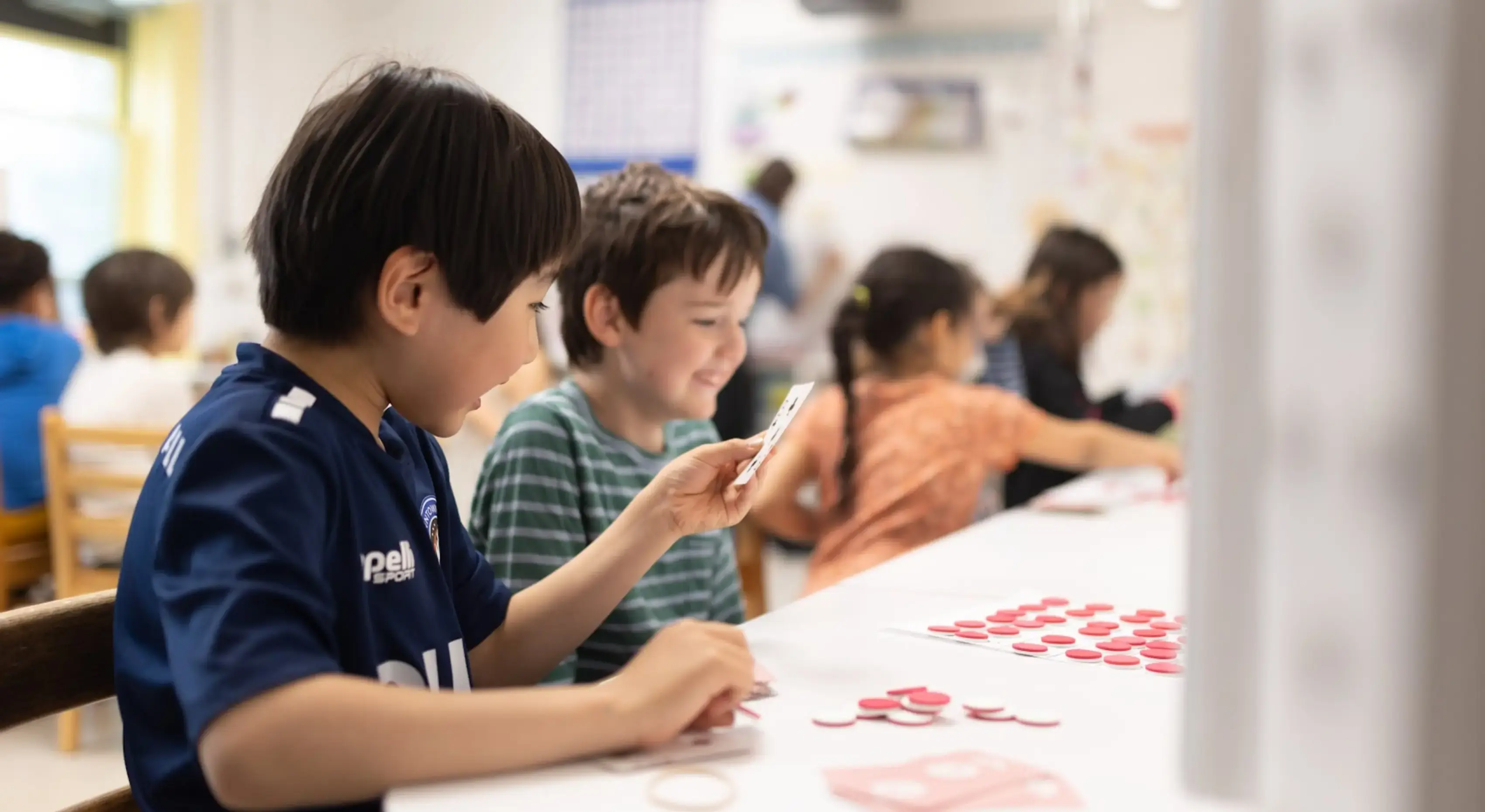
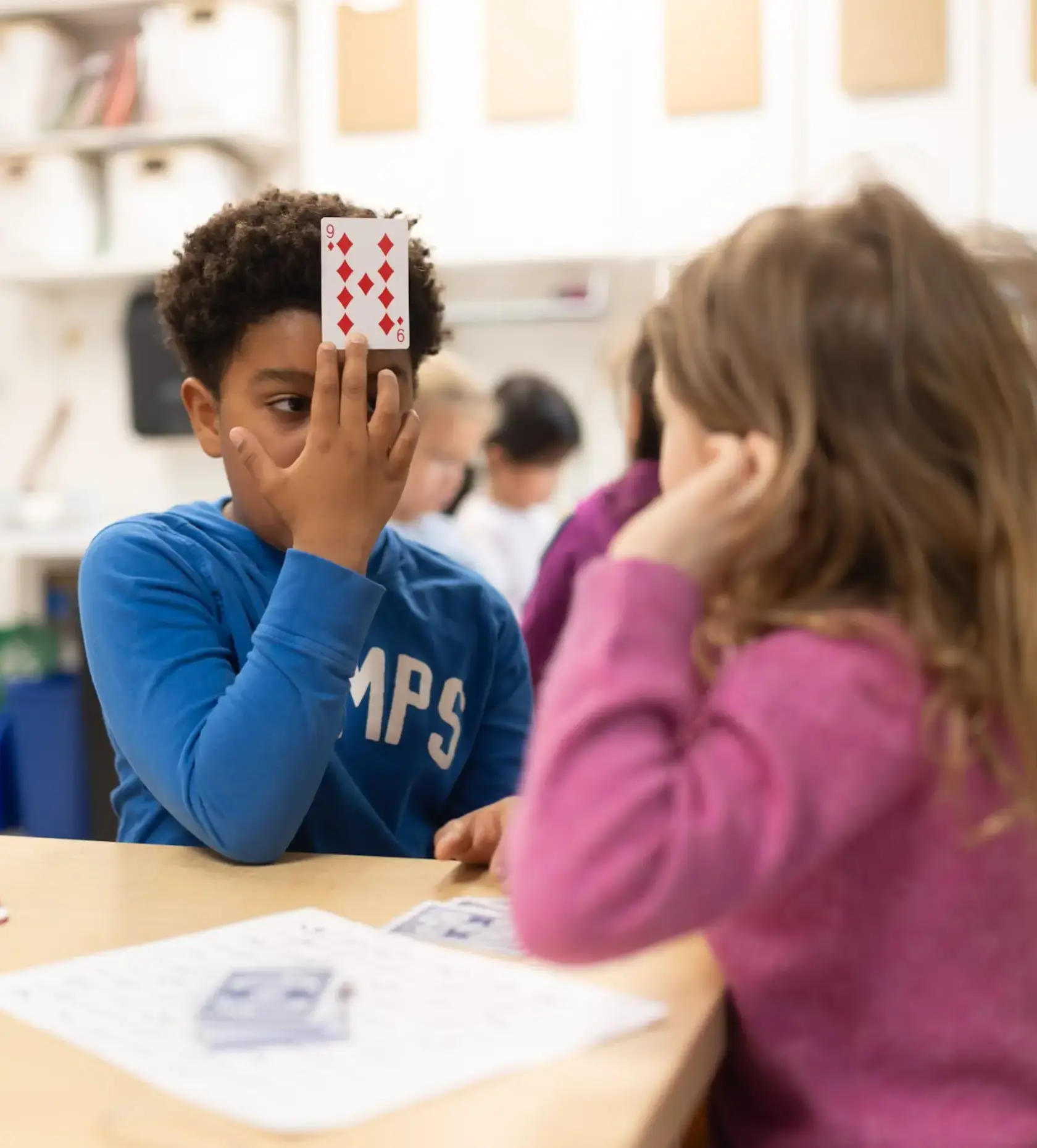
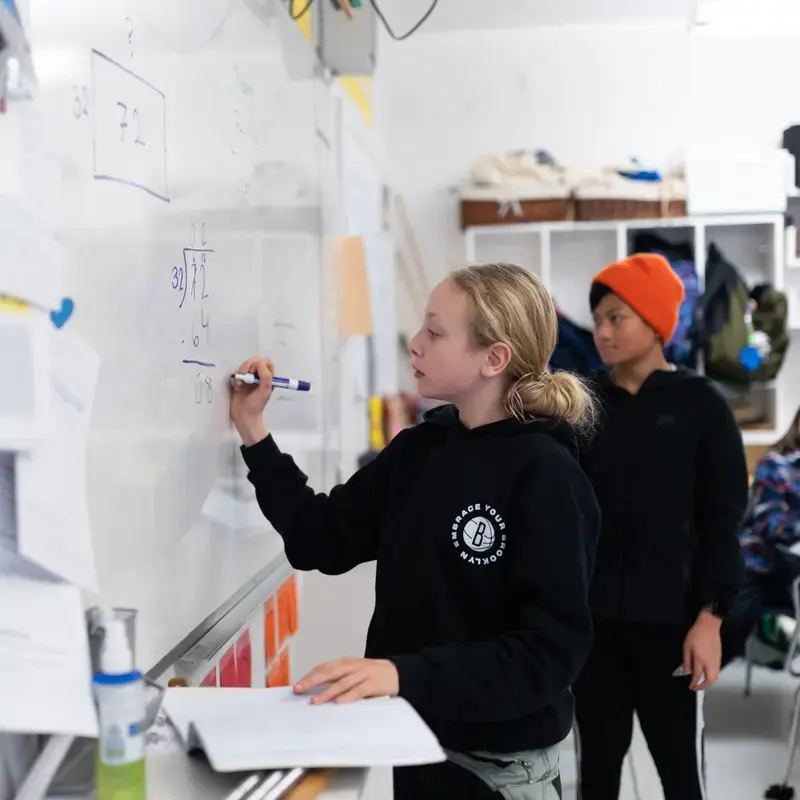
Guided by leading experts in math education, City and Country students engage with math instruction that promotes inquiry, real-life application, and robust discussion. We introduce students to mathematical concepts through purposeful open-ended investigation, and then guide students towards mastery of procedural fluency and deep conceptual understanding through continued explicit practice. Students develop their ability to defend their mathematical thinking both on paper through problem-solving strategies, and to their peers through rich math conversations. Mathematical concepts are consistently applied throughout students’ daily lives at school; when taking morning attendance, gathering snack for their Group, ordering supplies from the School Store, or measuring projects in Wood Shop, students see their developing mathematical practice as directly relevant to their own needs and wants. By the end of the VIIs, Lower School students have solidified their understanding of our Base Ten Number System and place value, addition and subtraction operations, comparative measurement, and data, demonstrating strong, flexible numerical reasoning skills as well as confidence in their ability to approach complex mathematical questions on their own.
Language Arts
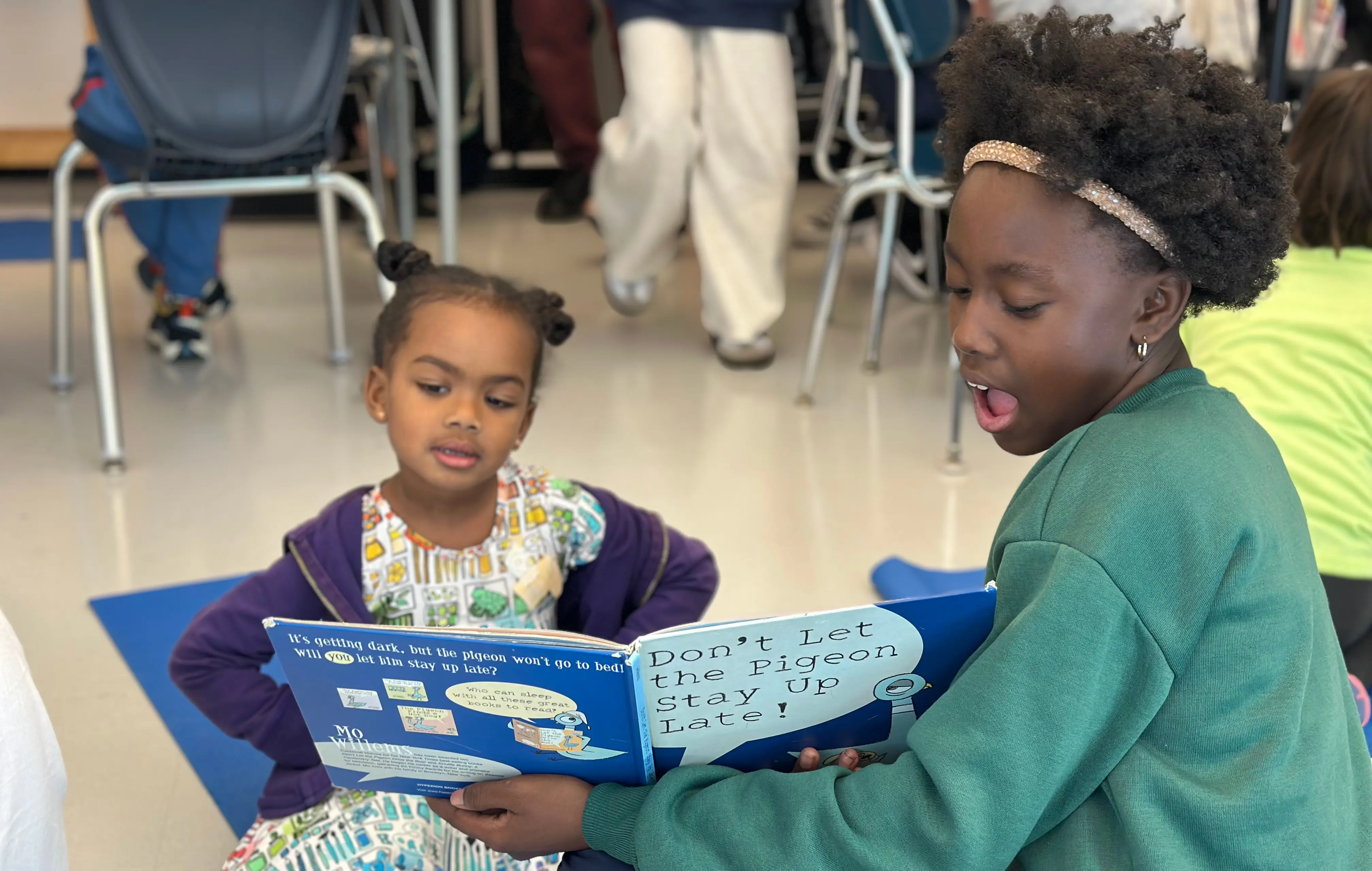
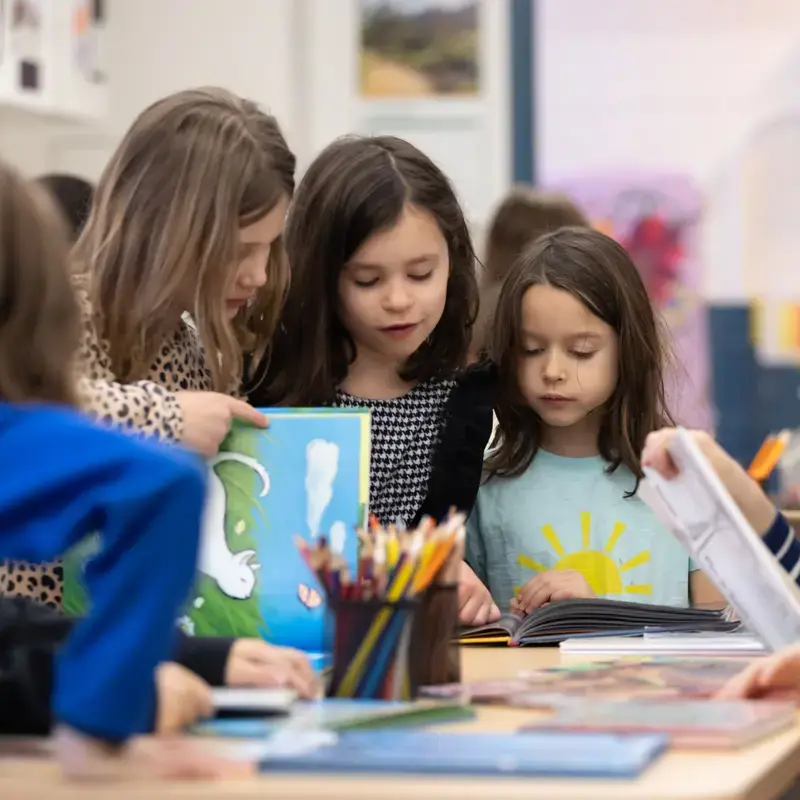
In the Vs-VIIs, Language Arts balances foundational skill development with authentic reading and writing experiences, using a structured program rooted in phonics and comprehension skills. Because we recognize that children develop literacy skills at different times and in different ways, our expert teachers use a responsive approach that meets children wherever they are in their development.
Science
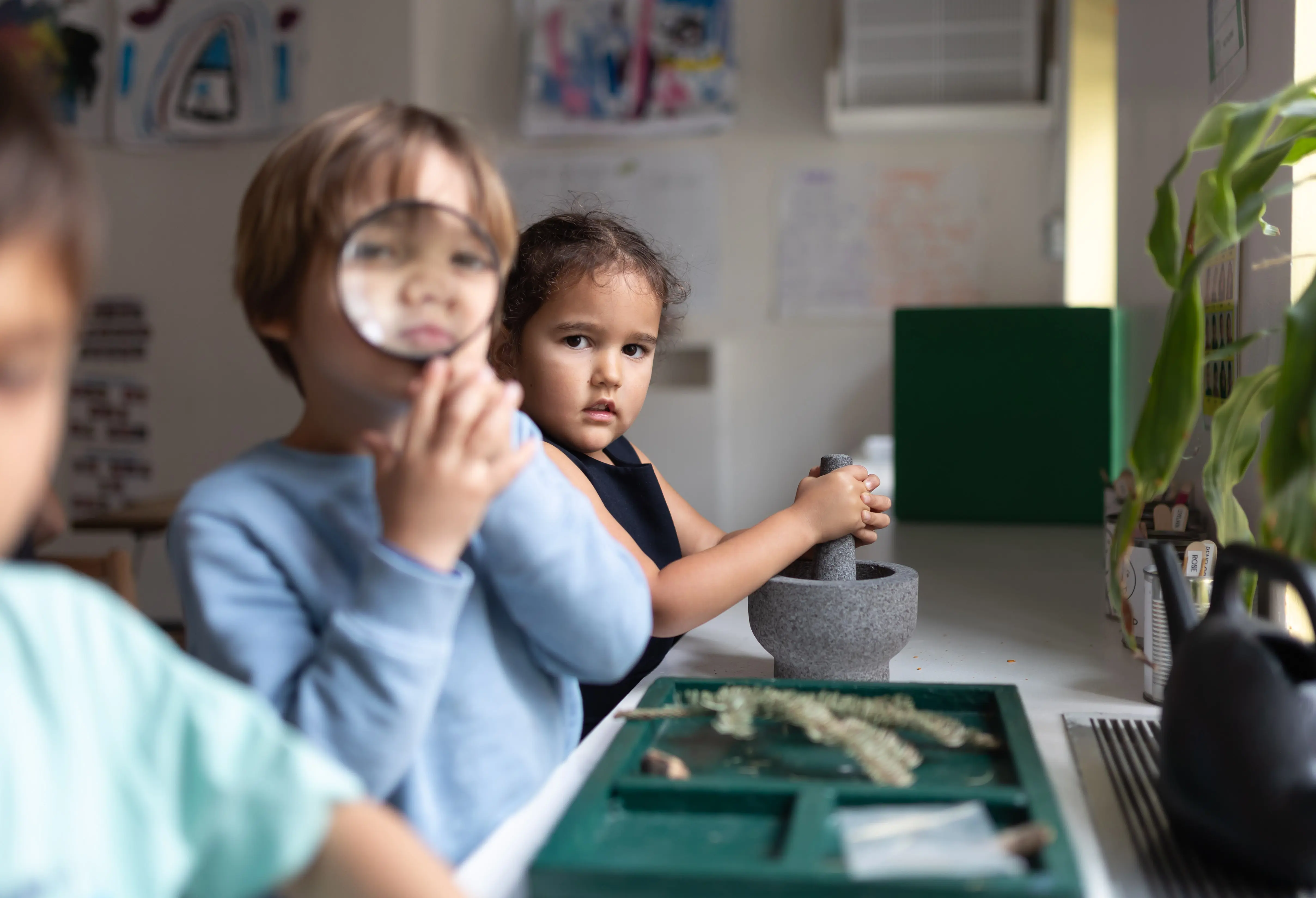
In the Lower School, students develop an understanding and appreciation of scientific practice alongside their blossoming skills as researchers. Children learn how scientists gather information in different ways to ask meaningful questions, grow their curiosity, and build an understanding of the world around them. They focus on the five senses, and experiment with using each sense to collect data. Students practice ways to make observations and document findings. Students build greater independence and stamina with documenting their observations, asking meaningful questions, and gathering data during experiments.
Student Support
The Lower School Student Support Team at C&C is designed to support children, teachers, and families. Composed of full-time Learning Specialists, Reading Specialists, the School Psychologist, School Nurse, and Division Directors, this group gets to know each student incredibly well and ensures that they are being supported and challenged effectively. In Vs-VIIs, our Learning Specialist and Reading Specialist provide direct reading instruction to children during their Language Arts periods throughout the week. At every turn, C&C fosters open communication and this group is no exception. We believe in addressing specific challenges early through observation, support within and outside of classrooms when appropriate, and consistent collaboration. Our goal is to understand and meet each child where they are, recognize their strengths and vulnerabilities, and support them to be their best selves both independently and as part of a group.
Music
Music provides structure and focus for children, cultivating rhythm, melody, harmony, listening skills, active participation, and collaboration through shared experience. Students explore songs from around the world with complex rhythms, rhyming lyrics, and coordinated movement, while strengthening cognitive skills and enjoying a range of engaging instruments under the music teacher’s guidance.
Art
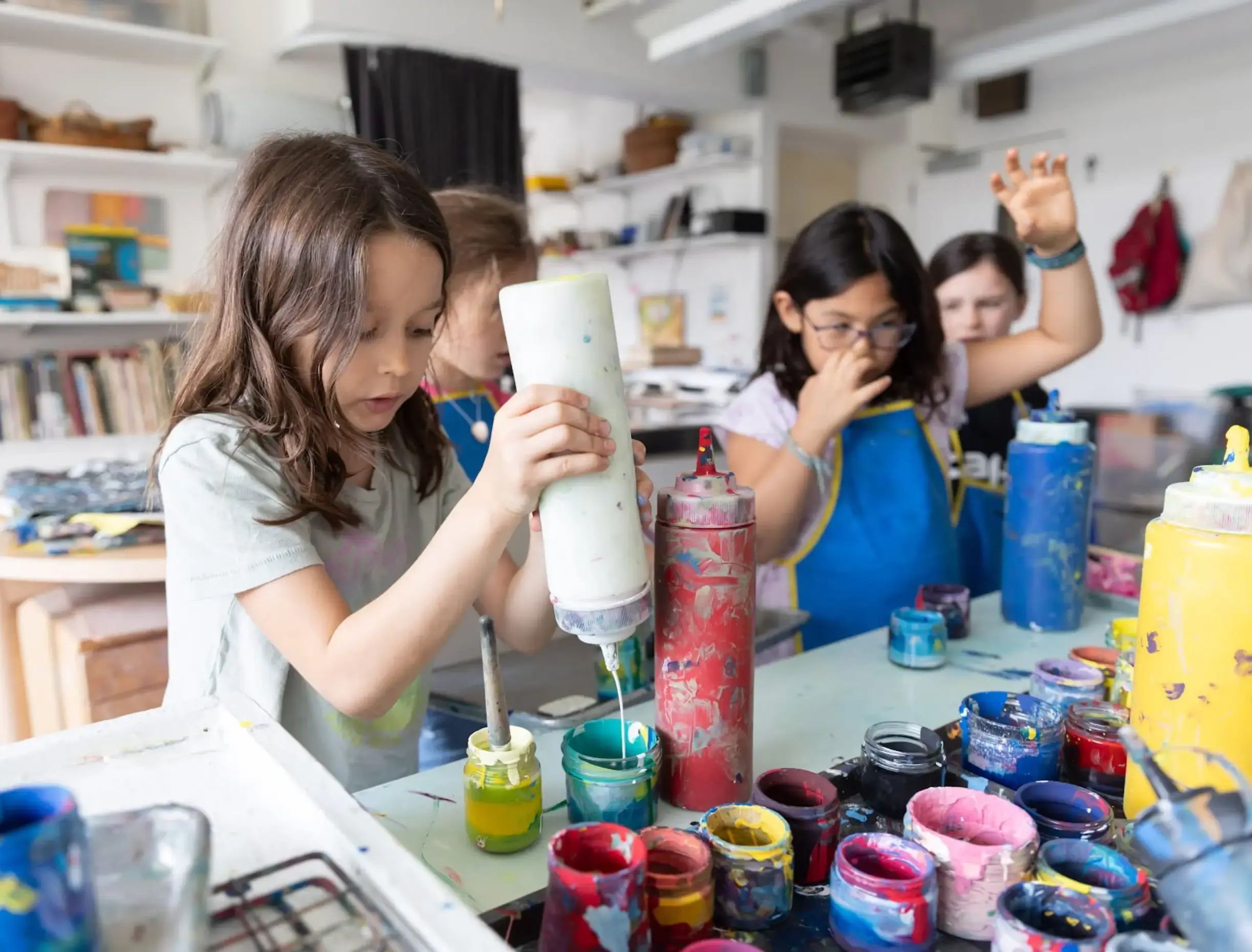
The Lower School Art Teacher visits the IVs and Vs classrooms, and students begin visiting the Art Studio midyear of the Vs program. Students engage with basic art materials–paper, paint and clay–creating unique, imaginative, and self-directed art works of all kinds. In the Art Studio students focus on collage (self-portraits), clay (pinch pots), and paint (natural pigments, watercolors, and murals).
Wood Shop
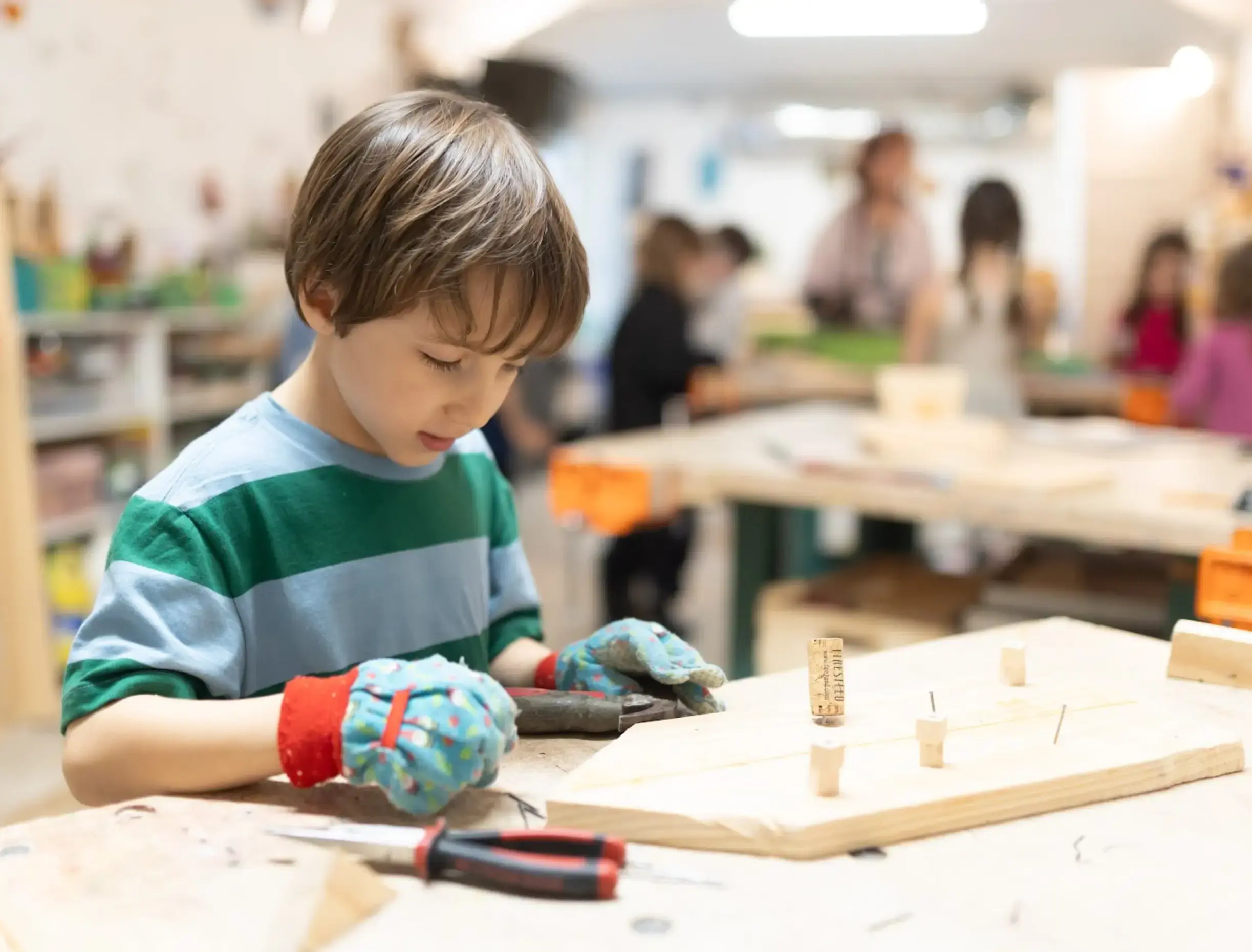
Woodworking requires layers of planning, coordination, engineering, and skill, and Lower School classrooms are each equipped with a woodworking bench and real tools. The program begins in the IVs with the Shop teacher visiting the IVs classrooms to teach basic skills and safety. In the Vs, students begin to visit the Shop itself with its vast collection of tools and opportunities. Children create a variety of woodworking pieces, often related to their block buildings or other academic interests.
Movement and PE
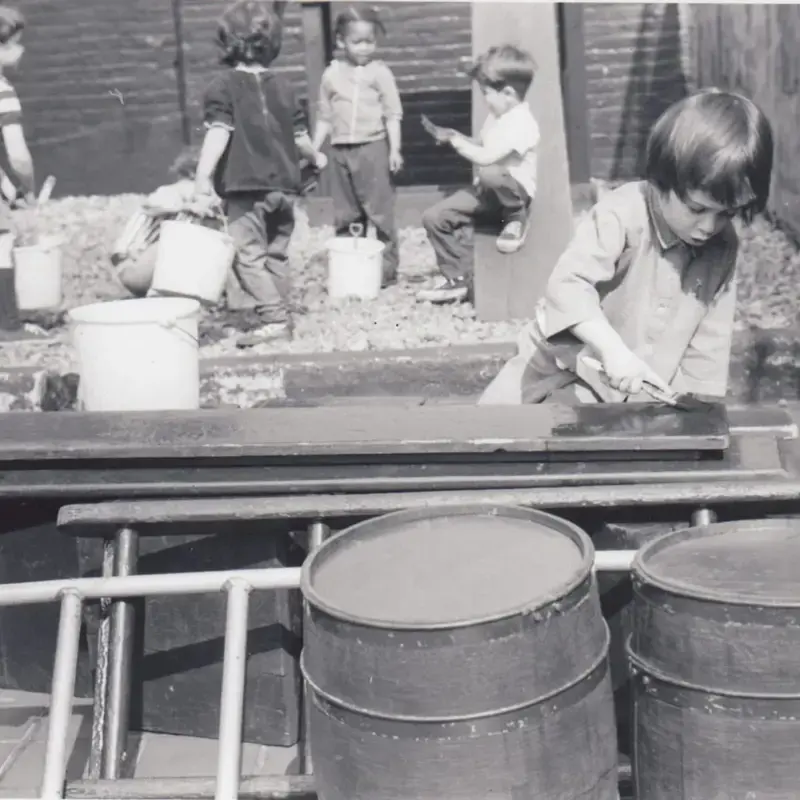
Children go outside every day, rain or shine, to play, build, and explore in the Block and River Yards. Outside, they work with another of Pratt’s inventions, outdoor wooden blocks, to create their own playground on a daily basis. Constructing such things as airplanes, concert stages, animal dens, and more, children exercise their minds and bodies while developing creativity, collaboration, and physical skills.
Technology
VIIs begin working with a technology integration teacher midyear. They explore different analog technologies people have used in the past, and transition to exploring various computers and how they have evolved over time, and how the working functions are similar and different to how the human brain processes information. VIIs also learn about simple machines and compare and contrast how these kinds of machines can be powered by human effort to make them operate, e.g. a rake, a baseball bat, a ramp, and pulleys for a curtain.
Social Studies
Children investigate topics that naturally emerge from their surroundings and experiences—from their immediate family and school community in the Vs, to our neighborhoods of Lower Manhattan in the VIs, outward into our borough and its history in the VIIs. Through their studies, Vs-VIIs navigate concepts of geography, rules and rights, history and change, and both individual and community needs and wants. Through their social studies research, City and Country students understand the interdependent systems of our world, and see themselves as active, capable contributors to those systems. These studies deepen their understanding of the world while offering rich contexts for interdisciplinary connections.
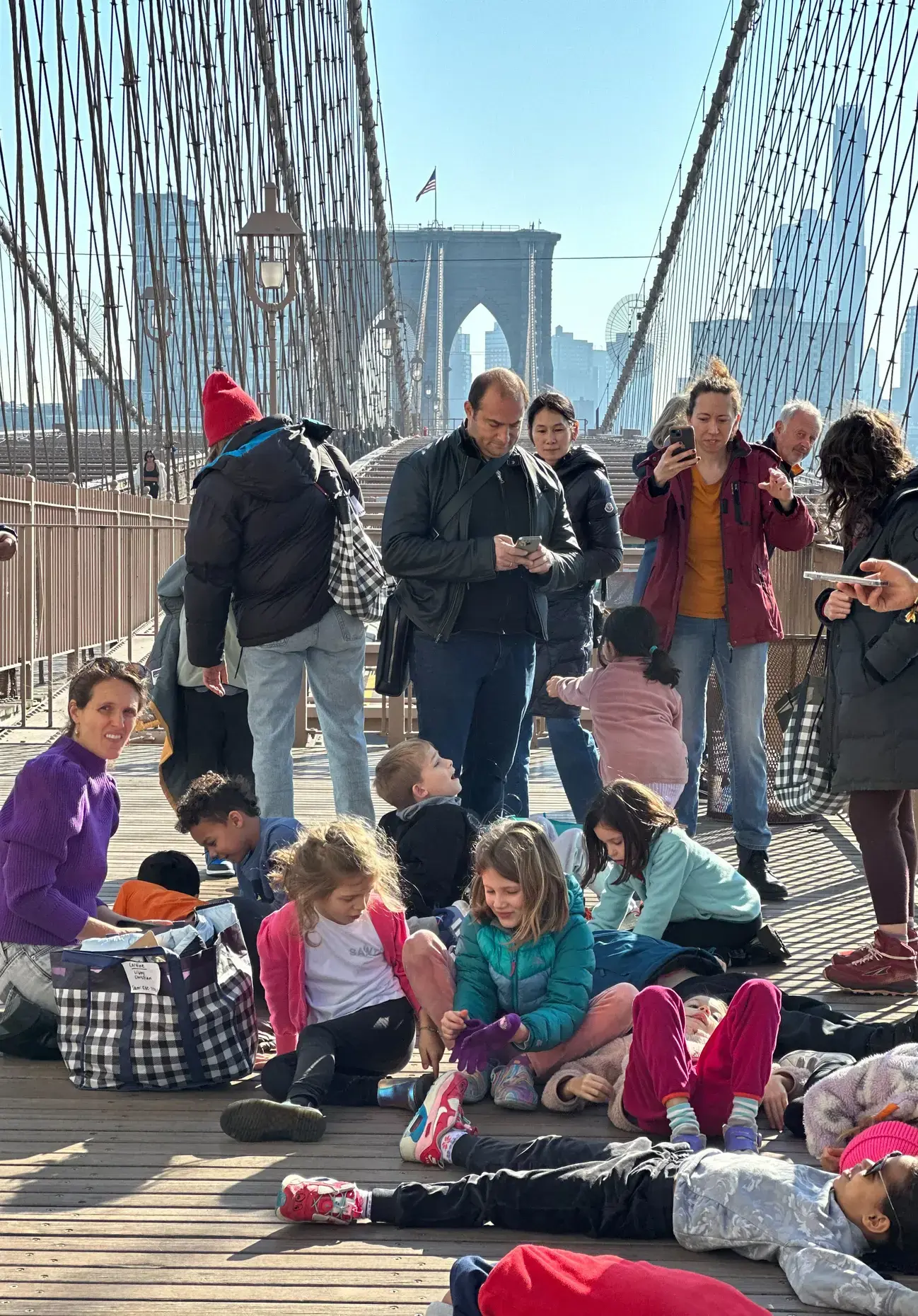
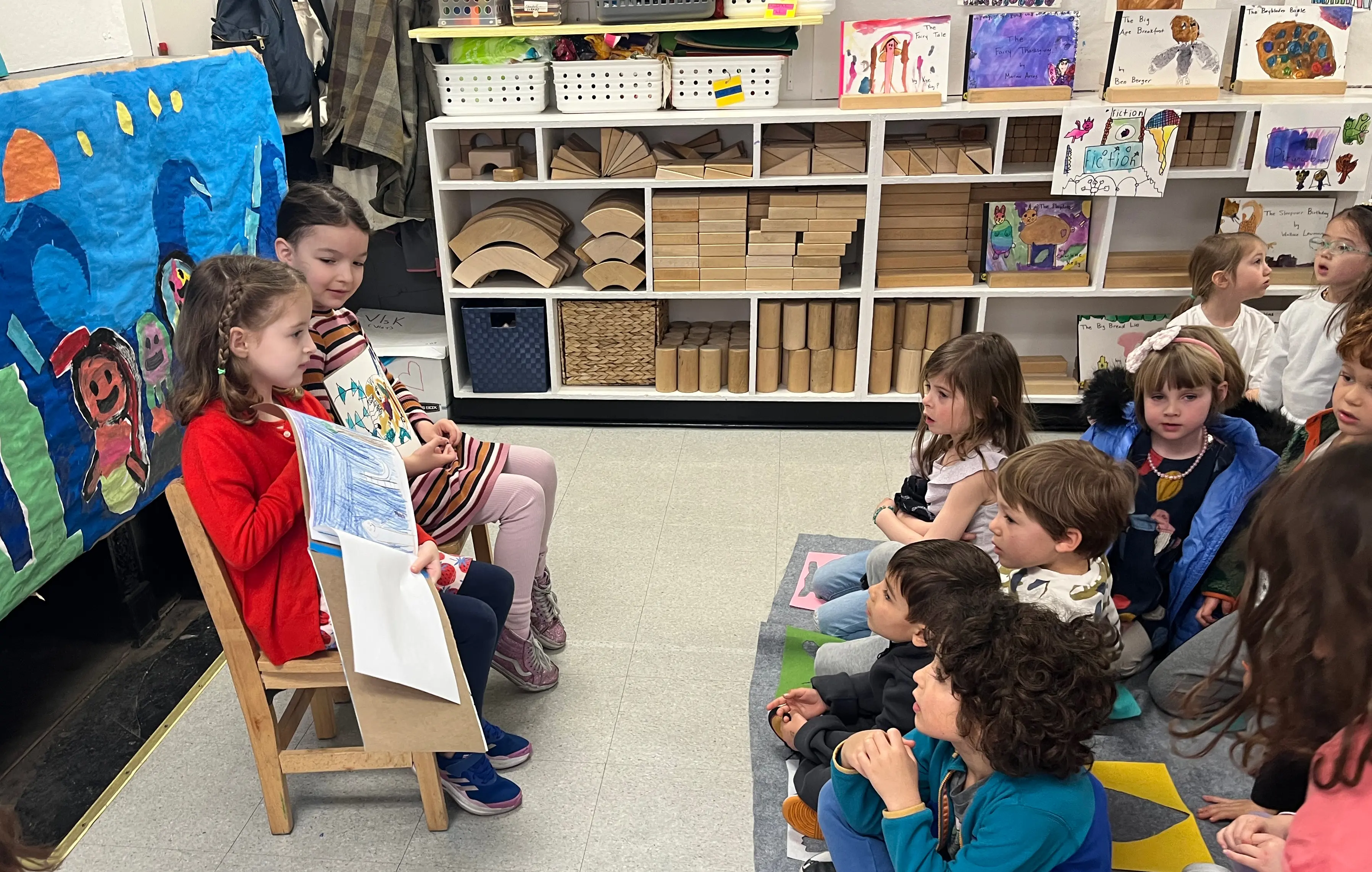
Students’ learning is most vividly expressed through their work with unit blocks, the invention of C&C founder Caroline Pratt, as block buildings become the backdrop for in-depth social studies research and clarifying narratives. Hands-on experiences anchor the learning, with field trips and visiting experts providing rich opportunities for Groups to engage directly with the vibrant world of New York City. Throughout their research, children reflect on their experiences, share insights, and deepen their understanding of the world and their place within it. City and Country students leave our Lower School equipped with the fundamental habits and practices of strong researchers: posing iterative questions, drawing conclusions, making connections across topics, observing how smaller parts contribute to a larger system, thinking critically about the world around them, and creating opportunities to share their understandings with their community.
Math
Guided by leading experts in math education, City and Country students engage with math instruction that promotes inquiry, real-life application, and robust discussion. We introduce students to mathematical concepts through purposeful open-ended investigation, and then guide students towards mastery of procedural fluency and deep conceptual understanding through continued explicit practice. Students develop their ability to defend their mathematical thinking both on paper through problem-solving strategies, and to their peers through rich math conversations. Mathematical concepts are consistently applied throughout students’ daily lives at school; when taking morning attendance, gathering snack for their Group, ordering supplies from the School Store, or measuring projects in Wood Shop, students see their developing mathematical practice as directly relevant to their own needs and wants. By the end of the VIIs, Lower School students have solidified their understanding of our Base Ten Number System and place value, addition and subtraction operations, comparative measurement, and data, demonstrating strong, flexible numerical reasoning skills as well as confidence in their ability to approach complex mathematical questions on their own.
Language Arts
In the Vs-VIIs, Language Arts balances foundational skill development with authentic reading and writing experiences, using a structured program rooted in phonics and comprehension skills. Because we recognize that children develop literacy skills at different times and in different ways, our expert teachers use a responsive approach that meets children wherever they are in their development.
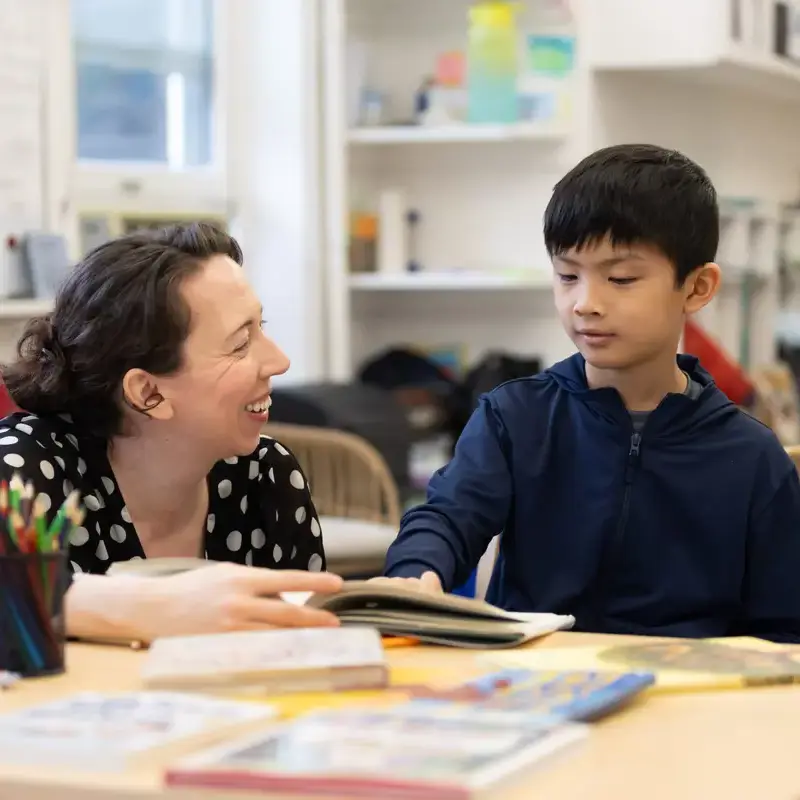
Reading in the Lower School is taught primarily in small groups. Sound-study instruction guides students from early phonemic awareness to accurate, fluent reading. Rich comprehension conversations support children to independently understand increasingly complex texts.
In the Lower School, students find inspiration in their daily lives and often write about their own learning and experiences. Lower School students are immersed in the writing process, moving through their own drafts with increasing independence. Building confidence as writers, children develop and employ an understanding of craft and structure elements as they gain experience writing within the four major genres (Narrative, Expository, Opinion, and Poetry). From crafting strong sentences describing how they spend their days at C&C in the Vs, to capturing poignant life moments through multi-chapter autobiographies in the VIs, or reporting their research findings about their study of the Brooklyn Bridge in the VIIs, Lower School students are intrinsically motivated by opportunities to apply their writing skills throughout the day in service of sharing their ideas and experiences with their community.
By providing the right amount of challenge to guide each child forward, our research-backed approach combines engaging and diverse language experiences with direct reading and writing instruction differentiated to meet the needs of a variety of learners. Our goal is for students to build strong skills, independence in their Language Arts practice, and a deep appreciation for and love of reading and writing.
Science
In the Lower School, students develop an understanding and appreciation of scientific practice alongside their blossoming skills as researchers. Children learn how scientists gather information in different ways to ask meaningful questions, grow their curiosity, and build an understanding of the world around them. They focus on the five senses, and experiment with using each sense to collect data. Students practice ways to make observations and document findings. Students build greater independence and stamina with documenting their observations, asking meaningful questions, and gathering data during experiments.
In the VIs, they also explore how different objects interact with water - namely, how and why materials sink or float. Children experiment with multiple materials, assessing their shape, weight, and density, and notice trends between items that stay at the surface of water and items that sink.
In the VIIs, students learn about the states of matter and the water cycle. They conduct experiments to build meaning around evaporation, condensation, precipitation, and runoff, and form a connection between temperature changes and each stage of the cycle. Students also study electricity and learn about the connection between electricity and the movement of electrons, as well as the parts of a circuit and how each part functions. Lastly, the VIIs study plants and pollinators. They dissect different parts of plants, and examine how each aspect of a plant helps it survive.
Student Support
The Lower School Student Support Team at C&C is designed to support children, teachers, and families. Composed of full-time Learning Specialists, Reading Specialists, the School Psychologist, School Nurse, and Division Directors, this group gets to know each student incredibly well and ensures that they are being supported and challenged effectively. In Vs-VIIs, our Learning Specialist and Reading Specialist provide direct reading instruction to children during their Language Arts periods throughout the week. At every turn, C&C fosters open communication and this group is no exception. We believe in addressing specific challenges early through observation, support within and outside of classrooms when appropriate, and consistent collaboration. Our goal is to understand and meet each child where they are, recognize their strengths and vulnerabilities, and support them to be their best selves both independently and as part of a group.
Music
Music provides structure and focus for children, cultivating rhythm, melody, harmony, listening skills, active participation, and collaboration through shared experience. Students explore songs from around the world with complex rhythms, rhyming lyrics, and coordinated movement, while strengthening cognitive skills and enjoying a range of engaging instruments under the music teacher’s guidance.
Art
The Lower School Art Teacher visits the IVs and Vs classrooms, and students begin visiting the Art Studio midyear of the Vs program. Students engage with basic art materials–paper, paint and clay–creating unique, imaginative, and self-directed art works of all kinds. In the Art Studio students focus on collage (self-portraits), clay (pinch pots), and paint (natural pigments, watercolors, and murals).
Wood Shop
Woodworking requires layers of planning, coordination, engineering, and skill, and Lower School classrooms are each equipped with a woodworking bench and real tools. The program begins in the IVs with the Shop teacher visiting the IVs classrooms to teach basic skills and safety. In the Vs, students begin to visit the Shop itself with its vast collection of tools and opportunities. Children create a variety of woodworking pieces, often related to their block buildings or other academic interests.
Vs students can independently use the Western saw, metal files, sandpaper, and hammer, along with nails and other hardware.
VIs can also independently use coping saws and Japanese saws, and incorporate moving parts into their work through the use of hinges, dowels, wheels, as well as by experimenting with mixed materials.
VIIs begin with making a population of wooden people that reflect the diversity we see in our city. They build vehicles, planes, boats, trucks, cars, and more leading to their Permanent City project that requires extended planning, understanding assembly steps, and precision in measuring and marking.
Movement and PE
Children go outside every day, rain or shine, to play, build, and explore in the Block and River Yards. Outside, they work with another of Pratt’s inventions, outdoor wooden blocks, to create their own playground on a daily basis. Constructing such things as airplanes, concert stages, animal dens, and more, children exercise their minds and bodies while developing creativity, collaboration, and physical skills.
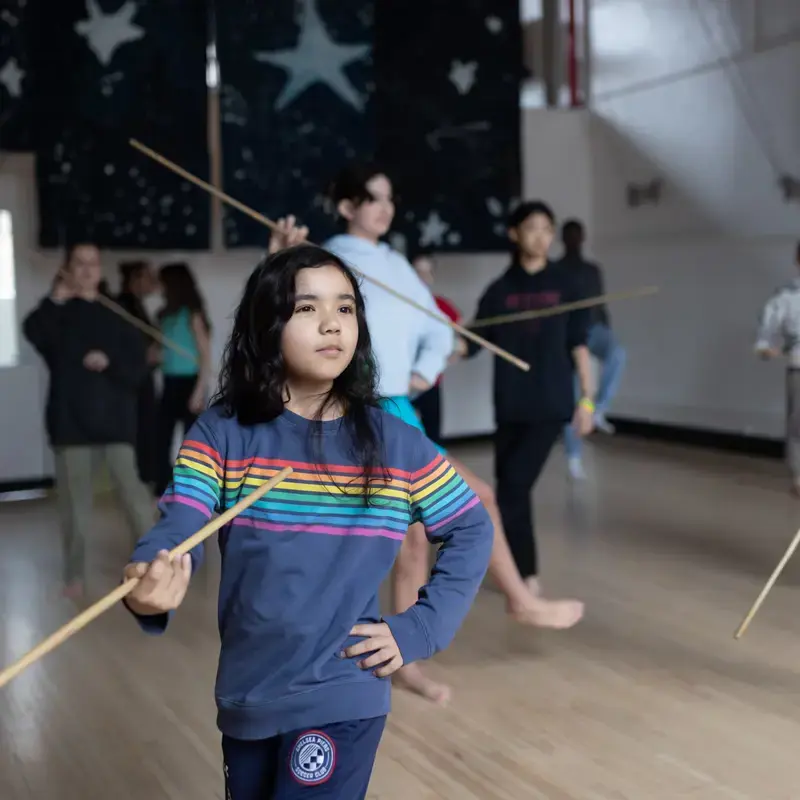
Rhythms is C&C’s unique movement program. A combination of physical skills, rhythmic movement, and dramatics, Rhythms takes place in a high-ceilinged studio with live piano accompaniment. Children use a variety of materials such as balls, hoops, and scarves to interpret music and engage their bodies. They also solidify their classroom learning by dramatizing their areas of study in Rhythms class; for example, as the VIIs learn the history of the Brooklyn Bridge, they will “build” the bridge in Rhythms by portraying the engineers and workers they have been studying, all set to appropriate music. The Rhythms program supports gross motor control, coordination, spatial awareness, and attention by engaging the cerebellum and activating the brain’s reward system. Through movement and rhythm, students develop focus and enhance their sense of joy in learning.
VIIs begin visiting the gym for PE. They practice moving in a big, indoor space and participate in a variety of tag games and cooperative games. They learn basic basketball skills such as dribbling, passing, and shooting, and also work on using a short paddle to strike a moving ball.
Technology
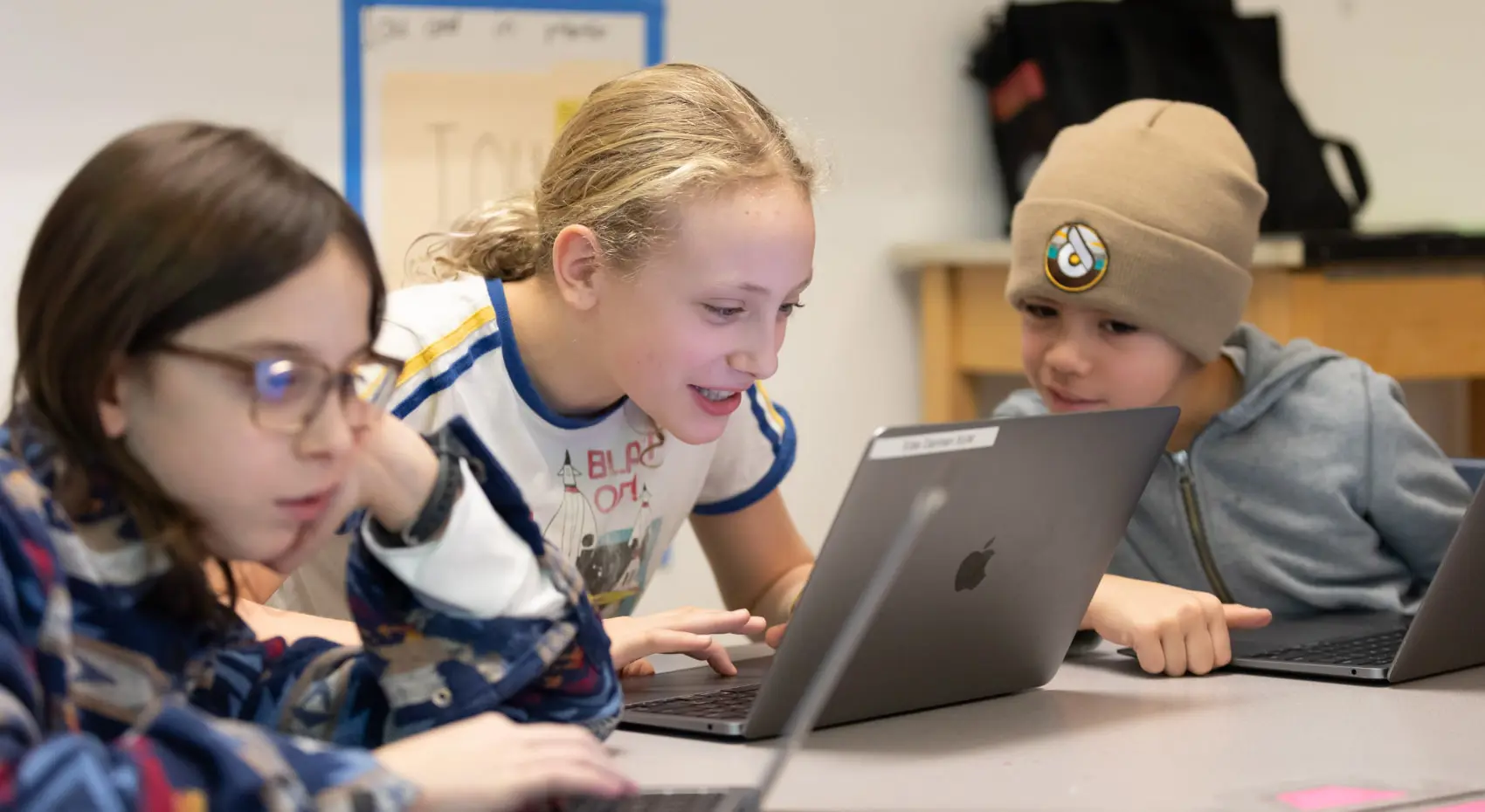
VIIs begin working with a technology integration teacher midyear. They explore different analog technologies people have used in the past, and transition to exploring various computers and how they have evolved over time, and how the working functions are similar and different to how the human brain processes information. VIIs also learn about simple machines and compare and contrast how these kinds of machines can be powered by human effort to make them operate, e.g. a rake, a baseball bat, a ramp, and pulleys for a curtain.