3rd–5th Grade | 3rd - 5th Grade Academics | City and Country School, New York
Alert
Info
Learning in 3rd-5th Grade
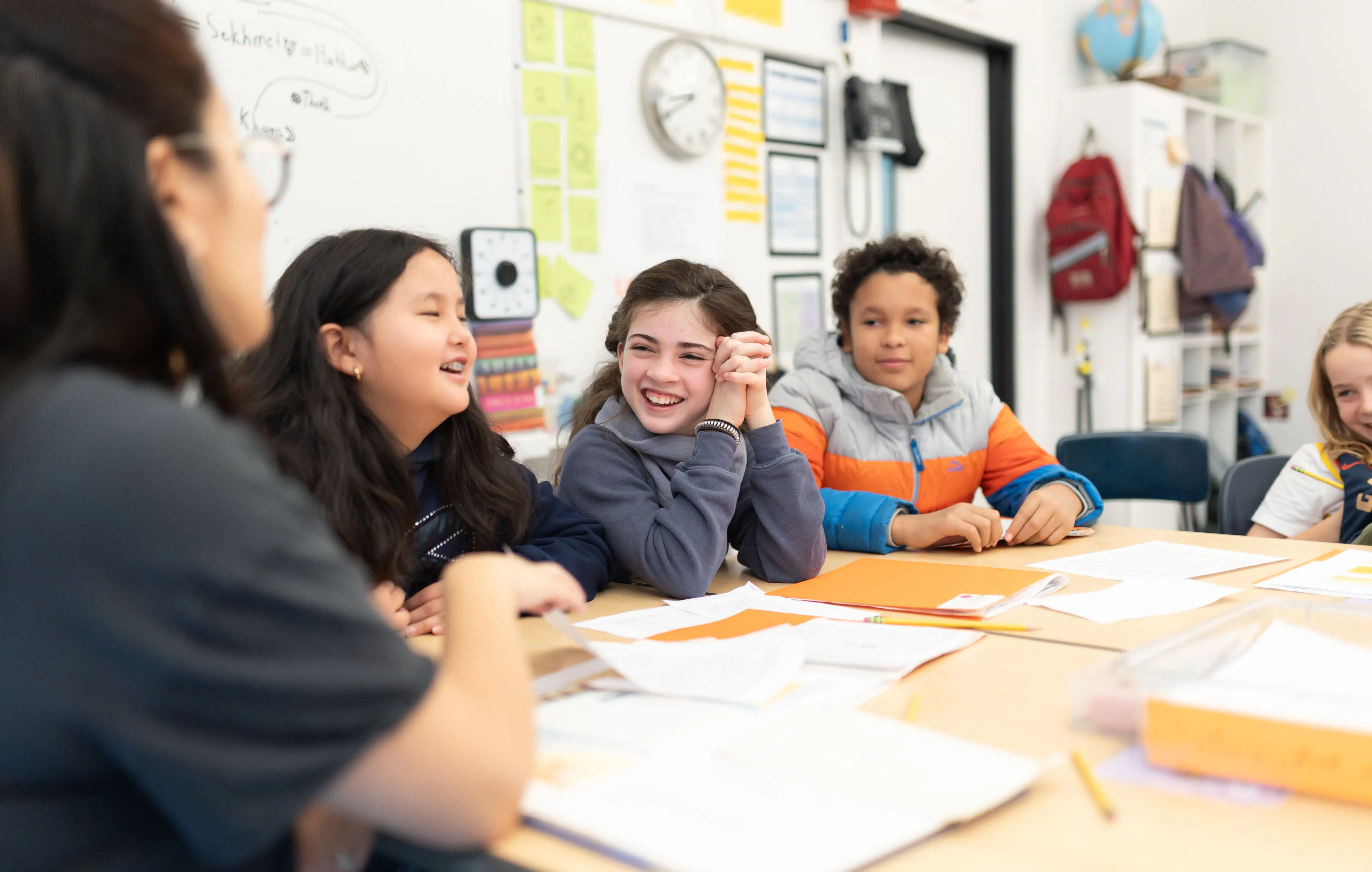
Children enter our Middle School program intrinsically driven to move beyond the concrete and immediate, yet still deeply intrigued by the connective daily life experiences of humanity. As our Middle School students work to expand their understanding from their immediate world to greater society both past and present, Social Studies naturally serves as the hub of the wheel: a framework for connecting literacy, math, science, and the arts, encouraging students to investigate topics that spark curiosity and connect to the broader world. In the VIIIs through Xs, students deepen their engagement with increasingly complex concepts while continuing to learn through studies and experiences rooted in real life. Collaboration becomes central, and our program fosters Middle School students' natural desire for productive social interaction. Children take on greater roles in the Jobs Program and learn to navigate group work, discussion, and problem solving with growing independence. At this stage, teachers foster critical thinking and reflection, guiding students to articulate ideas, consider multiple perspectives, and see themselves as capable contributors to their community.
MIDDLE SCHOOL · VIIIs–Xs
Explore the curriculum
Choose a subject to discover how learning comes to life.
Social Studies
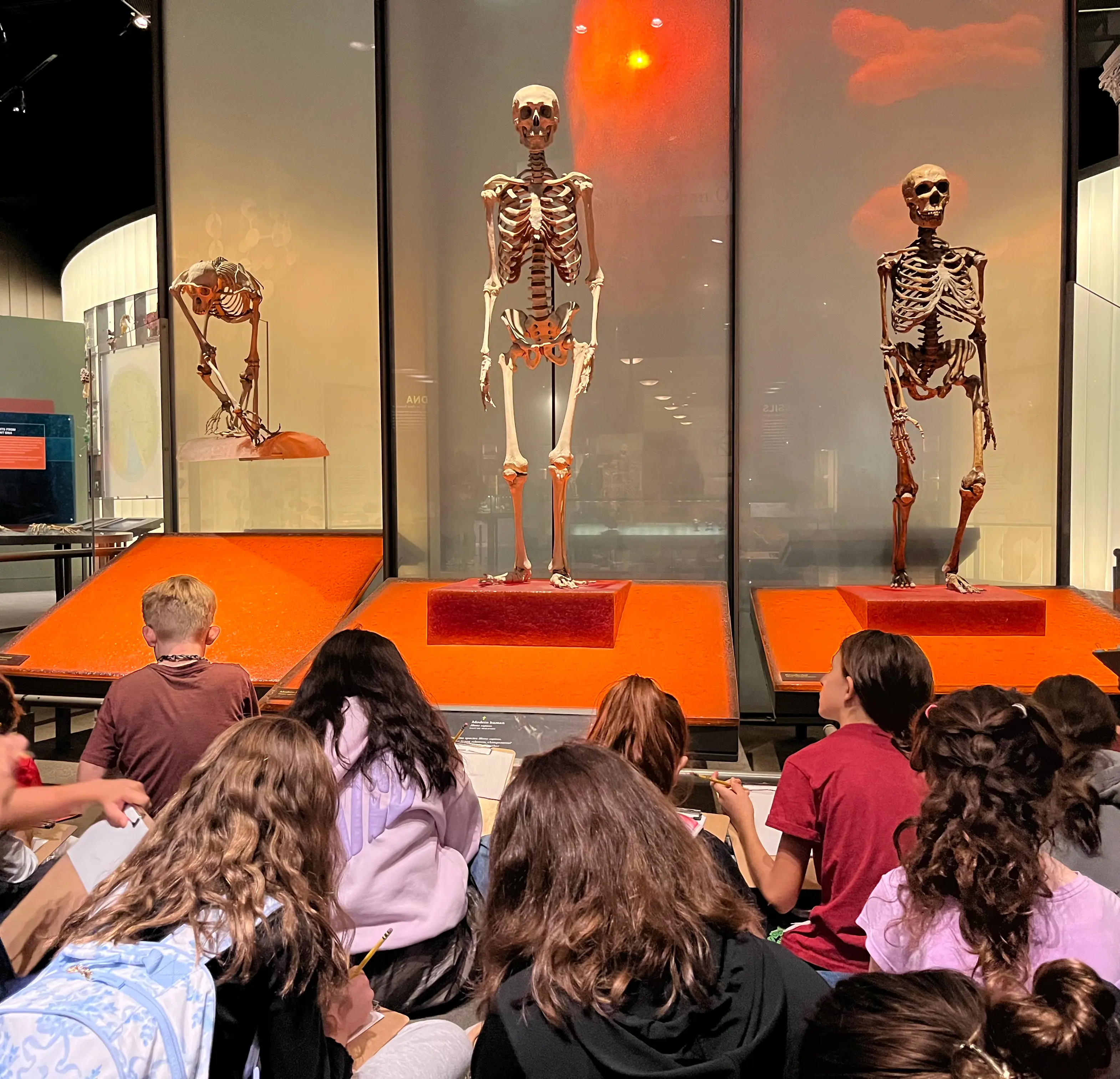
Having developed the skills of posing compelling questions, interacting with a variety of sources, drawing conclusions, and critically thinking through studies anchored in their immediate world in the Lower School, students enter Middle School prepared to explore increasingly complex topics. The VIIIs delve into our own Manhattan, long ago, in their study of the natural world and the indigenous inhabitants of New York City. The IXs examine New York City history through the experiences of immigrant communities in the mid- to late-nineteenth century. Xs expand their study beyond our region, examining ancient civilizations of the Mediterranean Basin.
Language Arts
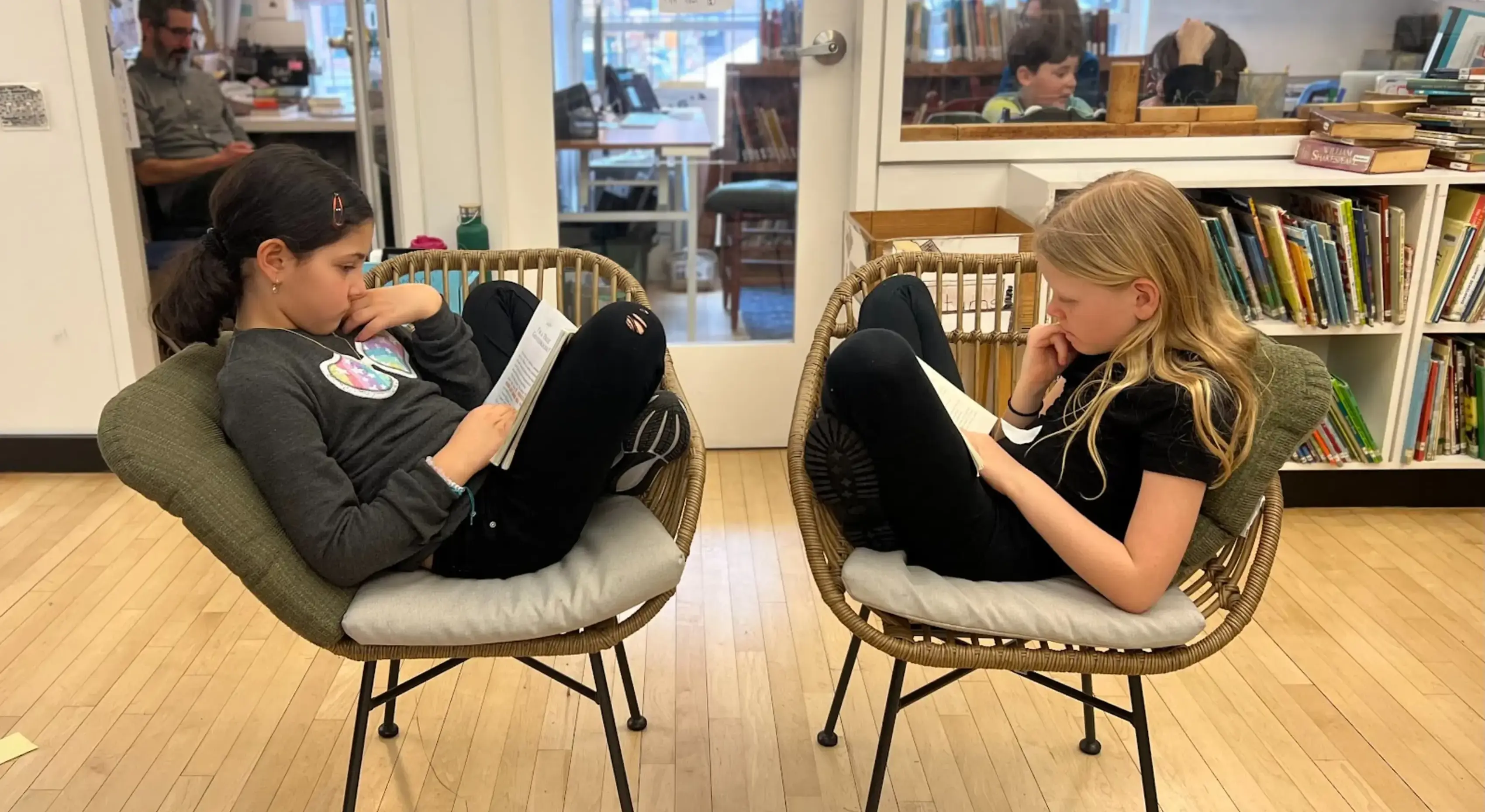
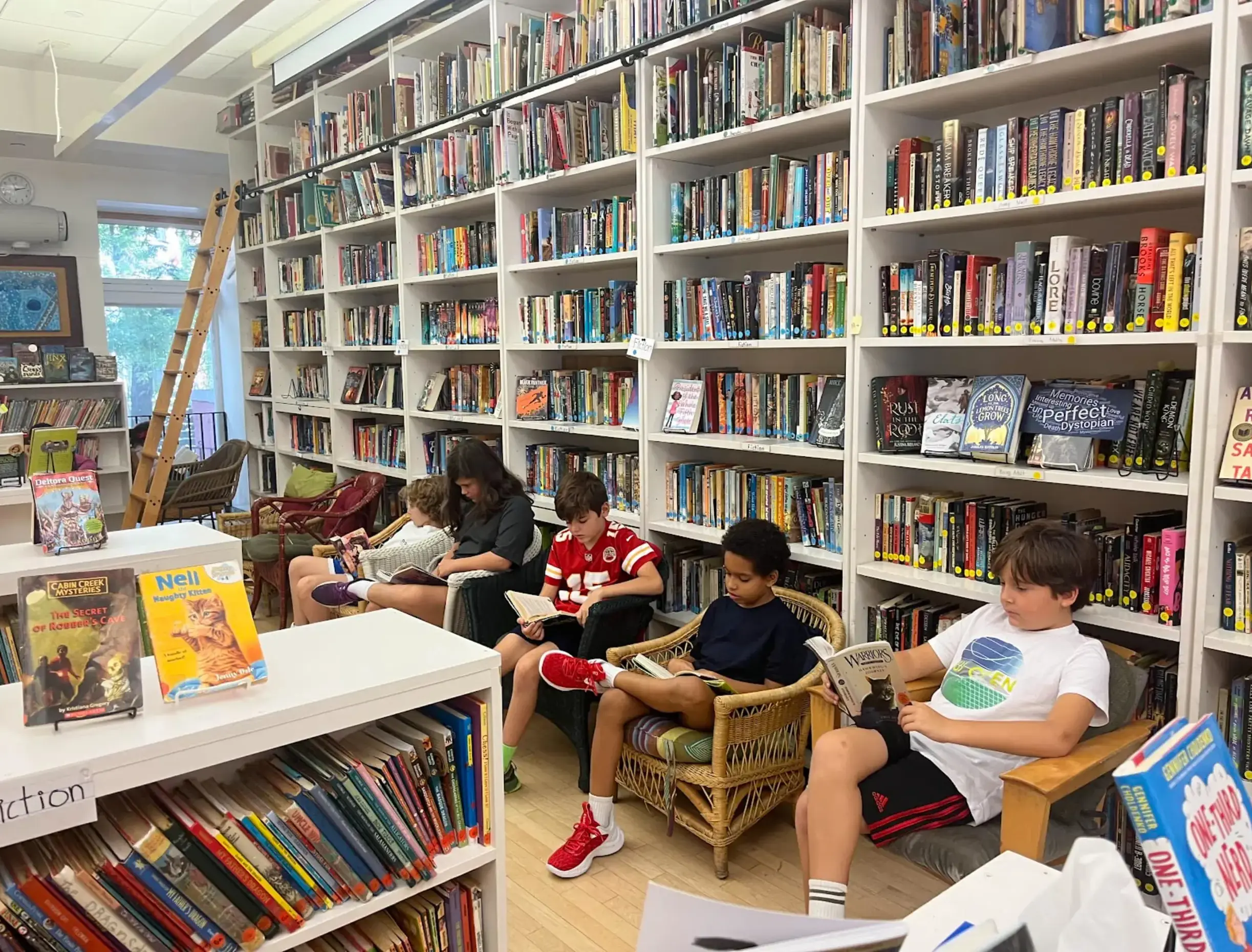
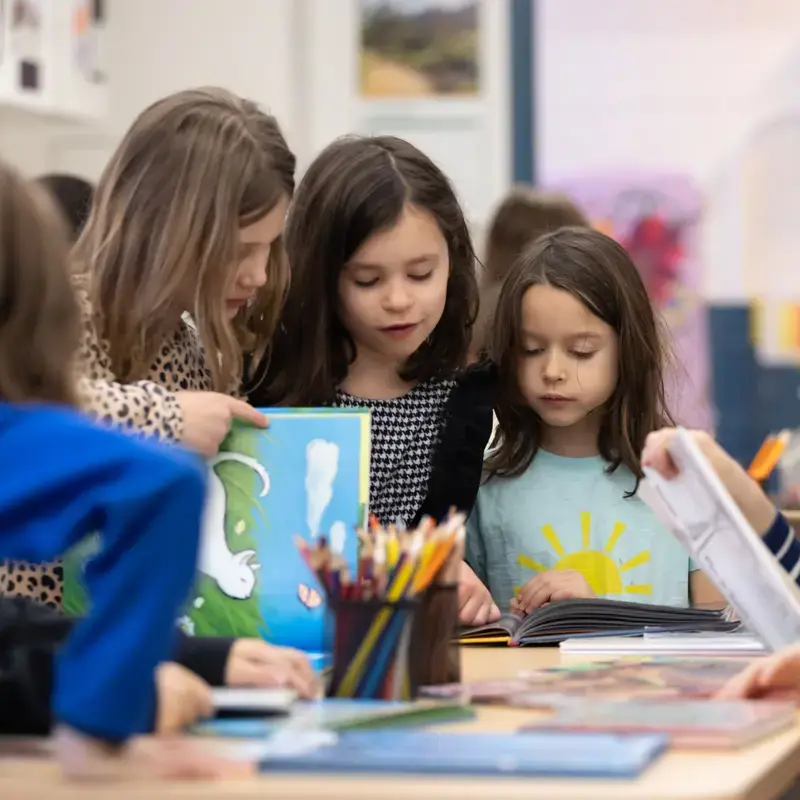
Middle School students at City and Country work to comprehend fiction and non-fiction texts with increasing levels of complexity, precision, and independence. Students scour non-fiction texts in connection to their social studies research, and analyze craft elements and complex storylines during literary book groups. Students practice reporting research findings, expressing opinions, and defending their claims with textual evidence, and creating compelling fiction stories through original compositions. Every day students also read for pleasure in our Library, reflecting meaningfully on their developing preferences as readers to select books that excite or inspire them. Students leave the Middle School prepared to engage with high-level textual analysis in a variety of genres of text as well as independently employing strong craft and structural elements to create essays or works of fiction.
Math
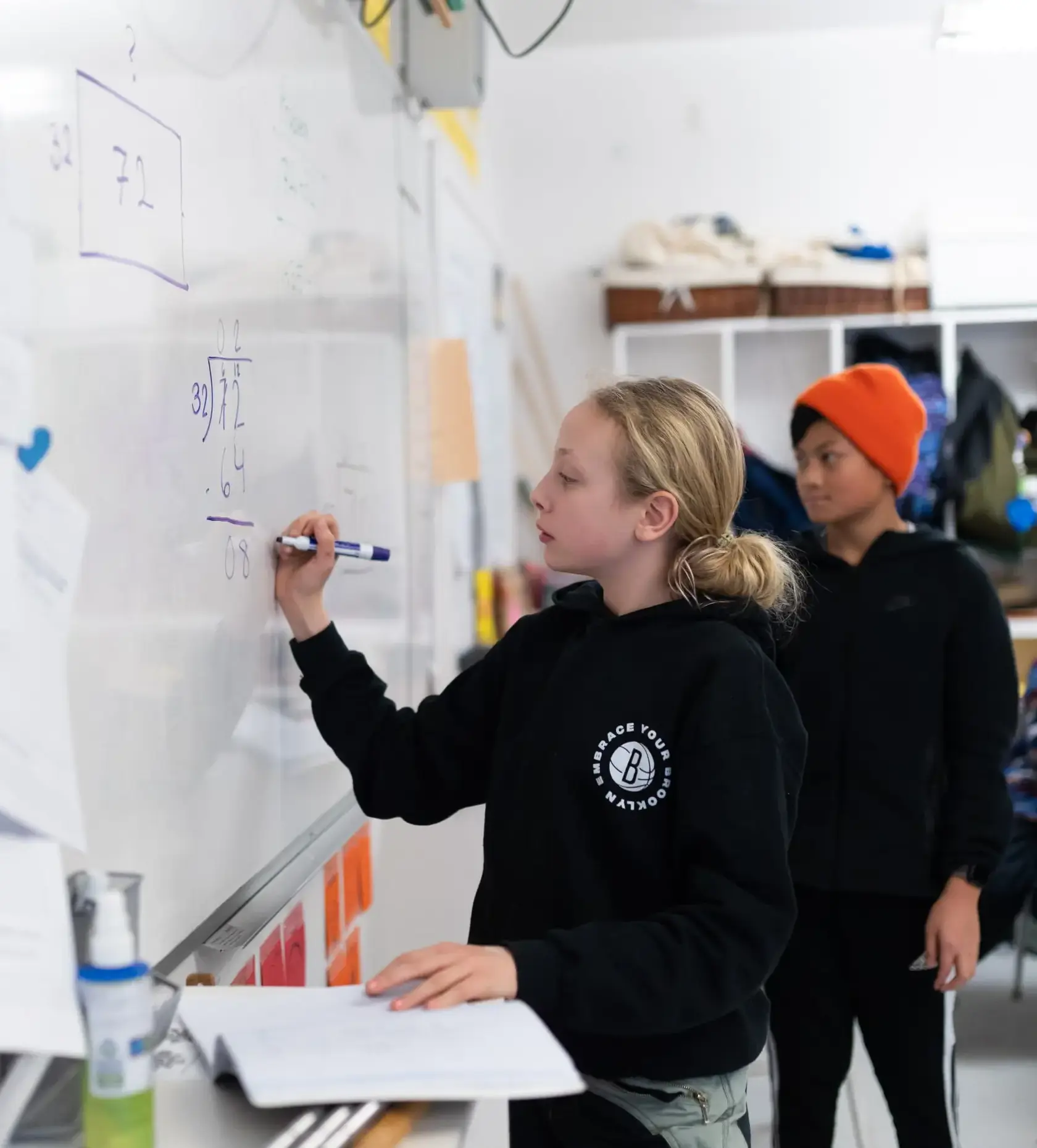
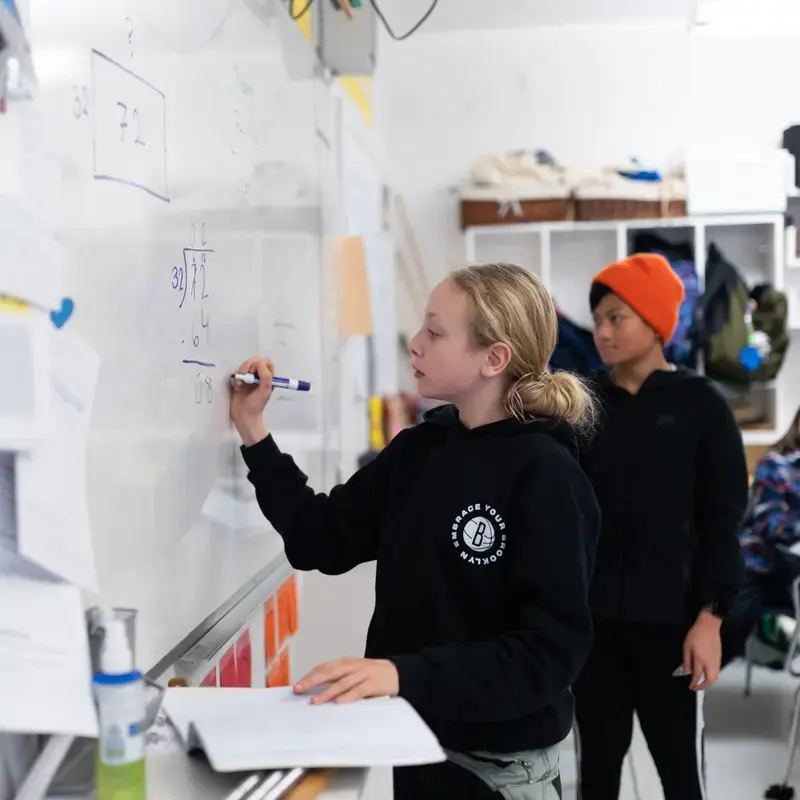
We believe that as children grow older, math remains best learned when placed in authentic contexts, through both intentional, research-based curriculum and direct instruction, as well as purposeful activities integrated into children’s daily life at school. City and Country uses Illustrative Mathematics, a Next Generation standards-aligned curriculum emphasizing exploration of math concepts in real-world situations, grappling with complex problems, and communicating mathematical thinking through robust collaboration. In addition to direct instruction in math, students employ grade-level math concepts through the daily management of their jobs at the Post Office, School Store, and Sign Company. By the end of their time in our Middle School, students build both conceptual understanding and fluency employing the four operations in both whole numbers as well as fractions and decimals, forms of measurement, data collection and interpretation, and geometric properties, while developing reasoning and perseverance in their problem solving, which will prepare them for their work towards Algebra in the Upper School.
Science
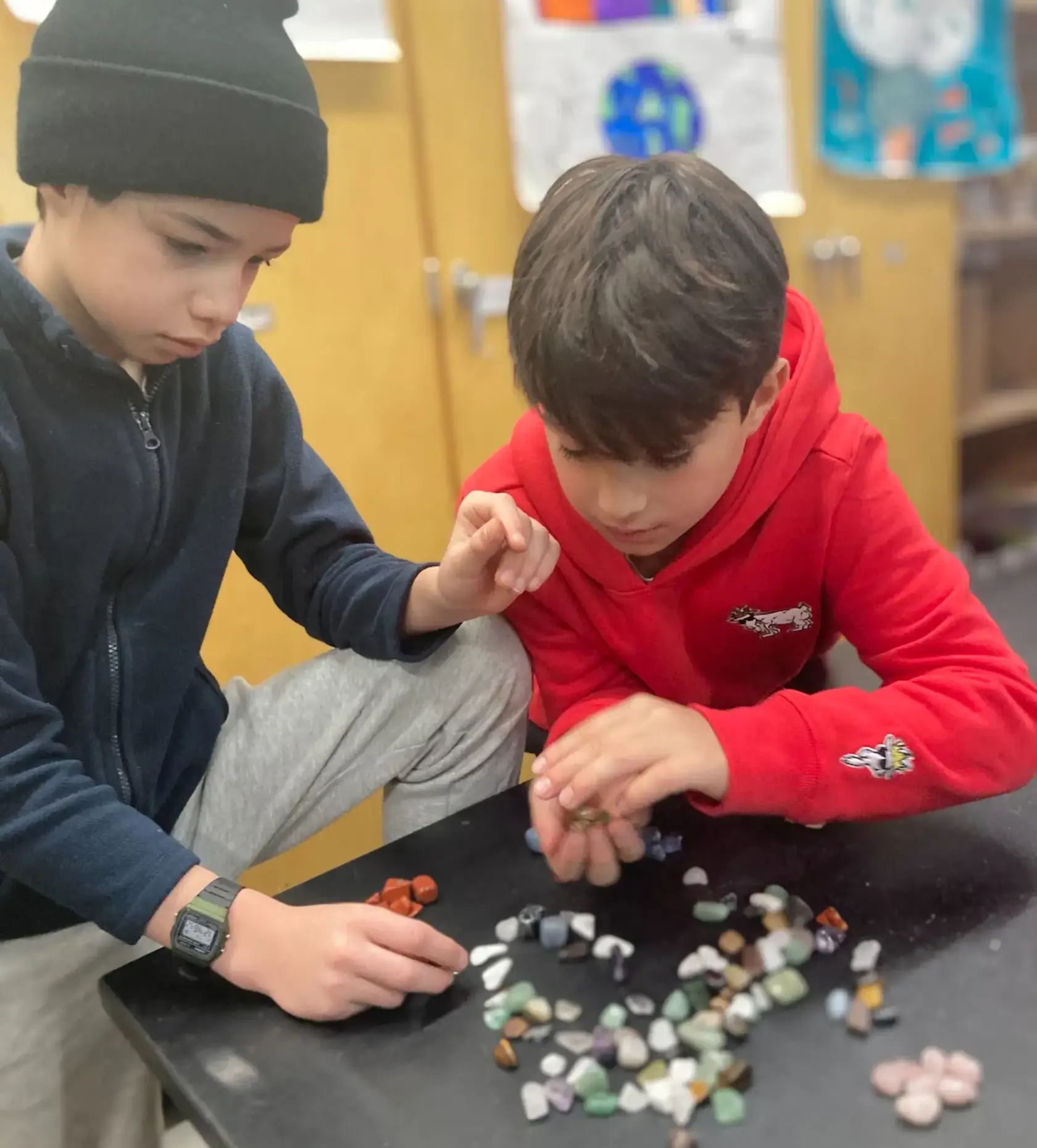
Science at C&C blends direct instruction in Next Generation Science Standards aligned skills within the context of our Social Studies curriculum. Middle School students develop their skills of more formal scientific experimentation - generating observations that shape hypotheses, planning and carrying out small experiments and trials, and synthesizing their findings into understanding of scientific principals. Students see the scientific concepts they are engaging with brought to life within the context of their Social Studies focus - exploring earth sciences through the natural world of Manhattan long ago, experimenting with chemical change through food preservation practices of New York City immigrant enclaves, and understanding fossilization through Ancient Egyptian mummification. These contextualized, hands-on experiences deepen understanding of scientific concepts and how they appear in our daily lives.
Student Support
The Middle School Student Support Team at C&C is designed to support children, teachers, and families. Composed of full-time Learning Specialists, the School Psychologist, School Nurse, and Division Directors, this group gets to know each student incredibly well and ensures that they are being supported and challenged effectively. At every turn, C&C fosters open communication and this group is no exception. We believe in addressing specific challenges early through observation, support within and outside of classrooms when appropriate, and consistent collaboration. Our goal is to understand and meet each child where they are, recognize their strengths and vulnerabilities, and support them to be their best selves both independently and as part of a group.
Social Studies
Having developed the skills of posing compelling questions, interacting with a variety of sources, drawing conclusions, and critically thinking through studies anchored in their immediate world in the Lower School, students enter Middle School prepared to explore increasingly complex topics. The VIIIs delve into our own Manhattan, long ago, in their study of the natural world and the indigenous inhabitants of New York City. The IXs examine New York City history through the experiences of immigrant communities in the mid- to late-nineteenth century. Xs expand their study beyond our region, examining ancient civilizations of the Mediterranean Basin.
Our goal is to foster a curiosity and engagement with the study, as well as consideration of multiple perspectives and a critical examination of historical events. To that end, Middle School studies continue to be anchored in the daily lives of the people living long ago while examining the way societies have evolved over time and the impact of historical events on the people living them. Throughout the Middle School, studies remain grounded in primary sources, field trips, and student-led inquiry; as our Middle School students look back into the past they must work to increasingly shift their search for knowledge from our immediate world to academic texts. In-depth studies culminate in presentations, written work, or collaborative models that bring history and society to life.
Language Arts
Middle School students at City and Country work to comprehend fiction and non-fiction texts with increasing levels of complexity, precision, and independence. Students scour non-fiction texts in connection to their social studies research, and analyze craft elements and complex storylines during literary book groups. Students practice reporting research findings, expressing opinions, and defending their claims with textual evidence, and creating compelling fiction stories through original compositions. Every day students also read for pleasure in our Library, reflecting meaningfully on their developing preferences as readers to select books that excite or inspire them. Students leave the Middle School prepared to engage with high-level textual analysis in a variety of genres of text as well as independently employing strong craft and structural elements to create essays or works of fiction.
Math
We believe that as children grow older, math remains best learned when placed in authentic contexts, through both intentional, research-based curriculum and direct instruction, as well as purposeful activities integrated into children’s daily life at school. City and Country uses Illustrative Mathematics, a Next Generation standards-aligned curriculum emphasizing exploration of math concepts in real-world situations, grappling with complex problems, and communicating mathematical thinking through robust collaboration. In addition to direct instruction in math, students employ grade-level math concepts through the daily management of their jobs at the Post Office, School Store, and Sign Company. By the end of their time in our Middle School, students build both conceptual understanding and fluency employing the four operations in both whole numbers as well as fractions and decimals, forms of measurement, data collection and interpretation, and geometric properties, while developing reasoning and perseverance in their problem solving, which will prepare them for their work towards Algebra in the Upper School.
Science
Science at C&C blends direct instruction in Next Generation Science Standards aligned skills within the context of our Social Studies curriculum. Middle School students develop their skills of more formal scientific experimentation - generating observations that shape hypotheses, planning and carrying out small experiments and trials, and synthesizing their findings into understanding of scientific principals. Students see the scientific concepts they are engaging with brought to life within the context of their Social Studies focus - exploring earth sciences through the natural world of Manhattan long ago, experimenting with chemical change through food preservation practices of New York City immigrant enclaves, and understanding fossilization through Ancient Egyptian mummification. These contextualized, hands-on experiences deepen understanding of scientific concepts and how they appear in our daily lives.
Student Support
The Middle School Student Support Team at C&C is designed to support children, teachers, and families. Composed of full-time Learning Specialists, the School Psychologist, School Nurse, and Division Directors, this group gets to know each student incredibly well and ensures that they are being supported and challenged effectively. At every turn, C&C fosters open communication and this group is no exception. We believe in addressing specific challenges early through observation, support within and outside of classrooms when appropriate, and consistent collaboration. Our goal is to understand and meet each child where they are, recognize their strengths and vulnerabilities, and support them to be their best selves both independently and as part of a group.